Daylight saving time ends in most of the United States at 2:00 a.m. local time on Sunday, November 1, 2026. Clocks move back one hour, creating a repeated hour. Travelers should verify departure times, time zones and device settings rather than assuming every clock updates automatically. NIST
Confirm the local rule
Most US states observe the November change, but Hawaii and most of Arizona do not observe daylight saving time. US territories also have different arrangements.
If your itinerary crosses a time-zone boundary or includes Arizona, check the local time for every departure and arrival. A route can involve both a geographic time-zone change and the seasonal clock change.
Use official transport information and the time printed on the current reservation. Do not calculate the schedule from memory.
Check every travel component
Review flights, trains, buses, tours, hotel checkouts and rental-car return times. Pay particular attention to departures shortly after midnight or early Sunday morning.
If a digital ticket changes after synchronization, keep the latest official version. For an important connection, verify it directly with the operator’s app or website.
Ask your accommodation about wake-up calls and airport transportation. Confirm whether the stated pickup time reflects standard time.
Update clocks deliberately
Phones connected to a network generally adjust automatically, but a device may retain a manually selected time zone or fail to update without connectivity.
Check the settings on your phone, smartwatch, tablet, camera and rental vehicle. Hotel-room clocks, microwaves and analog watches may require manual adjustment.
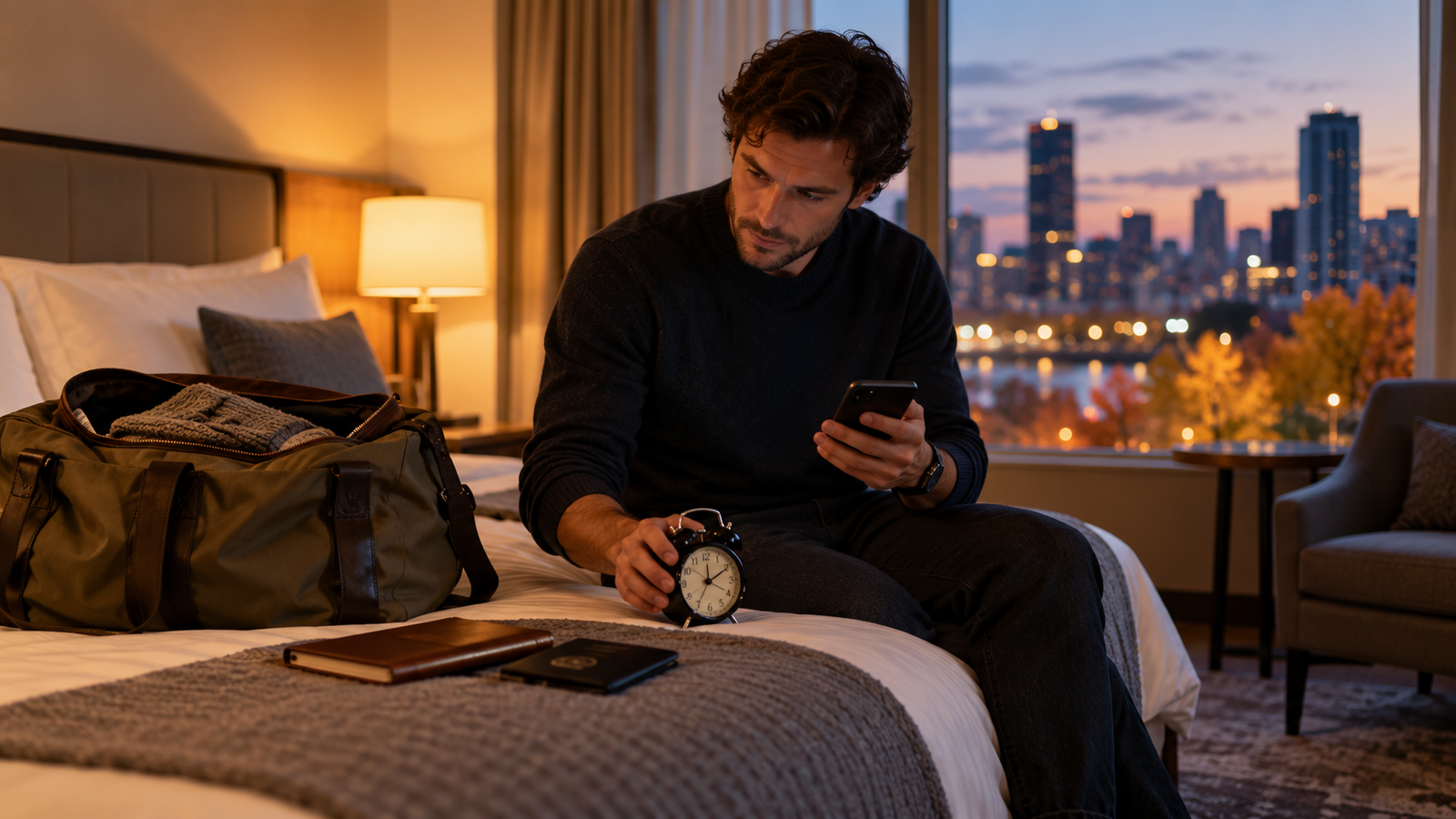
Set alarms only after confirming the displayed time zone. If catching an early departure, use a second alarm on another device and allow an extra buffer.
Plan for earlier darkness
Moving back to standard time means sunset occurs earlier by the clock. Outdoor plans that felt comfortable in late October may require an earlier start in November.
Check sunset time for the actual destination, carry a light and avoid beginning an unfamiliar trail late in the afternoon. Drivers should be prepared for more evening travel after dark.
Keep Sunday’s first activity flexible. The clock change may affect sleep even though the calendar provides an extra hour.
Takeaway: Verify the local rule, refresh every reservation and reset alarms only after your devices show the correct time.
FAQs
- When do clocks change in 2026? At 2:00 a.m. local time on November 1 in participating US regions.
- Does all of Arizona change its clocks? Most of Arizona does not observe DST, although the Navajo Nation does.
Source: NIST daylight saving time rules